
This post may contain affiliate links. See our disclosure.
Fukuoka is the easiest big Japanese city to choose a hotel in, because there are really only three areas a visitor should consider: Hakata, Tenjin, and Nakasu. They’re all connected by one short subway ride, so you can’t ruin your trip with a “wrong” choice — but each suits a different kind of traveler. As a local, here’s how I’d actually decide.
The 30-second answer
- First visit, or catching trains/flights: stay in Hakata.
- Here for food, bars and shopping: stay in Tenjin.
- Nightlife until late, yatai at your doorstep: stay in Nakasu.
Hakata: the practical base
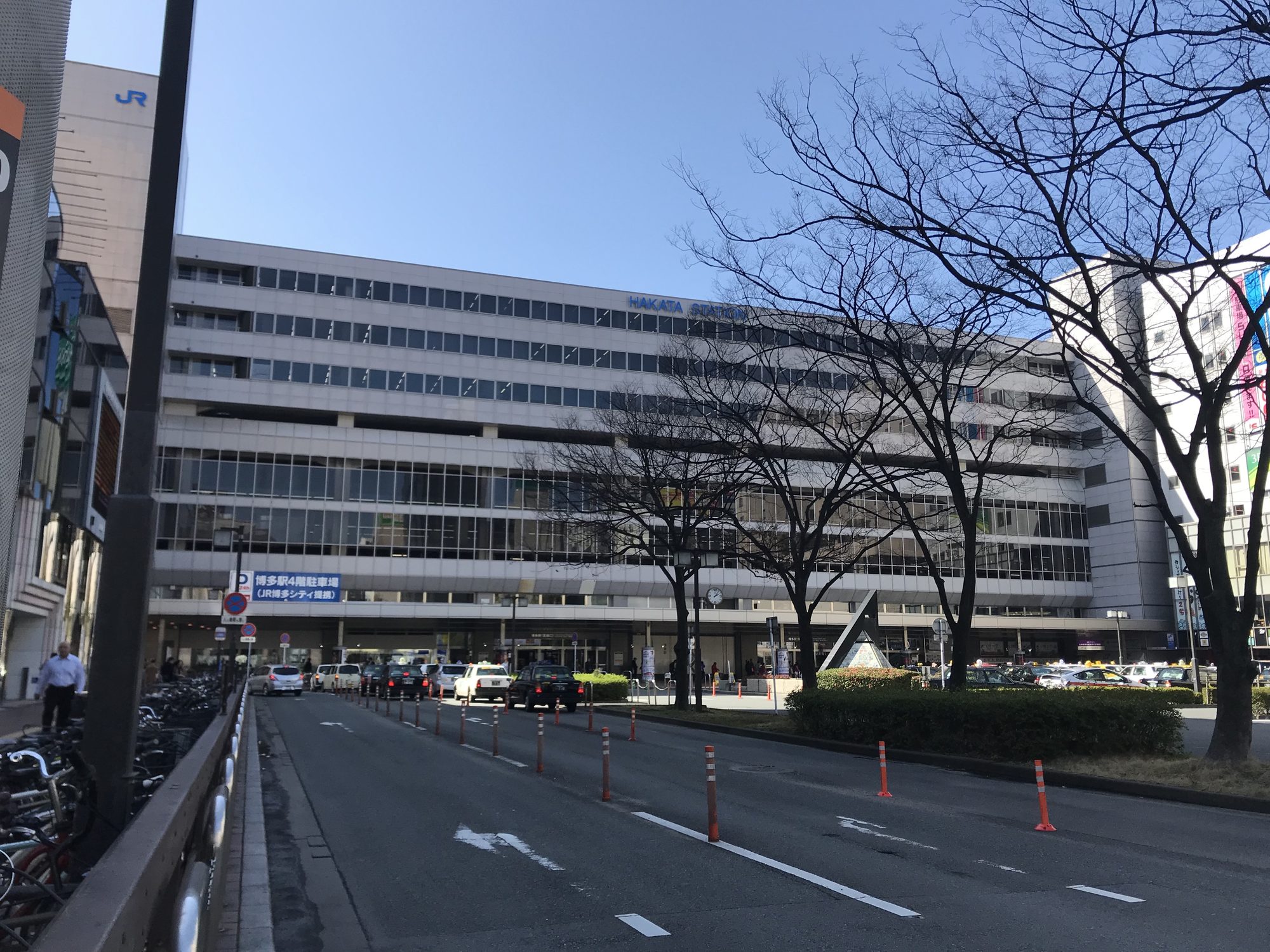
Hakata Station is Fukuoka’s transport heart — the shinkansen, the airport subway (two stops, about five minutes, which still amazes visitors), and direct trains to every day trip. The area around it is dense with business hotels, ramen shops and department-store food halls. It’s not the most atmospheric district, but for a first visit the convenience wins.
Best for: first-timers, rail-pass travelers, early flights.
Browse current prices: Hakata hotels on Agoda.
Tenjin: the fun base
Tenjin is where Fukuoka actually lives — the biggest shopping streets, the underground mall, and the highest density of restaurants and izakaya in Kyushu, with the Daimyo backstreets (vintage shops, cafes, cocktail bars) a five-minute walk away. The Tenjin Big Bang redevelopment has added a wave of new hotels in the past few years, so the options are newer than Hakata’s on average.
Best for: food-first travelers, night owls who still want taste, repeat visitors.
Browse current prices: Tenjin hotels on Agoda.
Nakasu: the atmospheric (and loud) base
Nakasu is the island entertainment district between Hakata and Tenjin — neon, riverside yatai stalls, and Kyushu’s most famous nightlife strip. Staying here means stumbling home from the stalls in five minutes. It also means noise, and parts of the district are adult-oriented at night; families usually prefer Hakata or Tenjin.
Best for: nightlife, yatai obsessives, couples without kids.
Budget notes from a local
Fukuoka hotel prices are gentle by Japanese-big-city standards: clean business hotels commonly run well under what Tokyo charges, and the city has a strong crop of stylish hostels. Prices spike hard during Yamakasa (early July), the November sumo tournament, and major concerts at PayPay Dome — if your dates are fixed around those, book early. Comparing across sites sometimes beats any single one: check Fukuoka hotels on Booking.com as your second quote.
What about staying near the airport or elsewhere?
Don’t. The airport is so close to Hakata that “airport hotels” solve a problem Fukuoka doesn’t have, and outlying areas save little money while costing you the city’s best feature: walking home from dinner. The one exception is swapping a city night for an onsen ryokan — see the day trips guide below.
A left-field option: Saitozaki (Uminonakamichi) — best for families
Here’s one most guides miss: Saitozaki, on the sand spit across Hakata Bay, with a boat connection to the city center. Let me be honest about who it’s for. There’s no nightlife out here — if you’re a group of friends or a couple who wants lively evenings and yatai at your doorstep, stay downtown. But for families, I’d recommend it even on a first visit: Marine World aquarium and the seaside park are right there, the beach is at your door, and slow days by the water with the city skyline across the bay make a completely different Fukuoka trip — one your kids will probably remember best.
The flagship stay out here is The Luigans Spa & Resort, inside the national seaside park itself: every room faces the ocean, family cabins sleep up to six, the day pool is free for guests in summer, and Marine World and the park gates are a few minutes on foot. Access is flexible — a high-speed boat from the city (15–20 minutes), JR around the bay, or a free shuttle — and my practical advice is to take the boat one way and the train the other. Two things to know before you book: there are no convenience stores nearby, so pick up essentials in the city first, and the beach in front of the hotel is for walking, not swimming.
Keep planning
Decide what fills your days with Things to Do in Fukuoka and the food guide, structure it with the 1–3 day itinerary, and if an onsen night tempts you, start with the day trips guide.