
This post may contain affiliate links. See our disclosure.
I was born in Fukuoka and I still live here, so this guide is full of the local knowledge most travel sites never print. And here’s the headline: if you’re coming to Japan mainly to eat, Fukuoka beats Tokyo and Osaka on value, and it isn’t close. This is a compact city where a bowl of ramen that ranks with Japan’s best costs under ¥1,000, where street food stalls open along the river every night, and where the locals genuinely argue about udon. Since you’ve come all this way, I want you to actually enjoy it — so here’s what to eat, where to eat it, and how to dodge the first-timer mistakes.
Hakata ramen: the dish that made this city famous
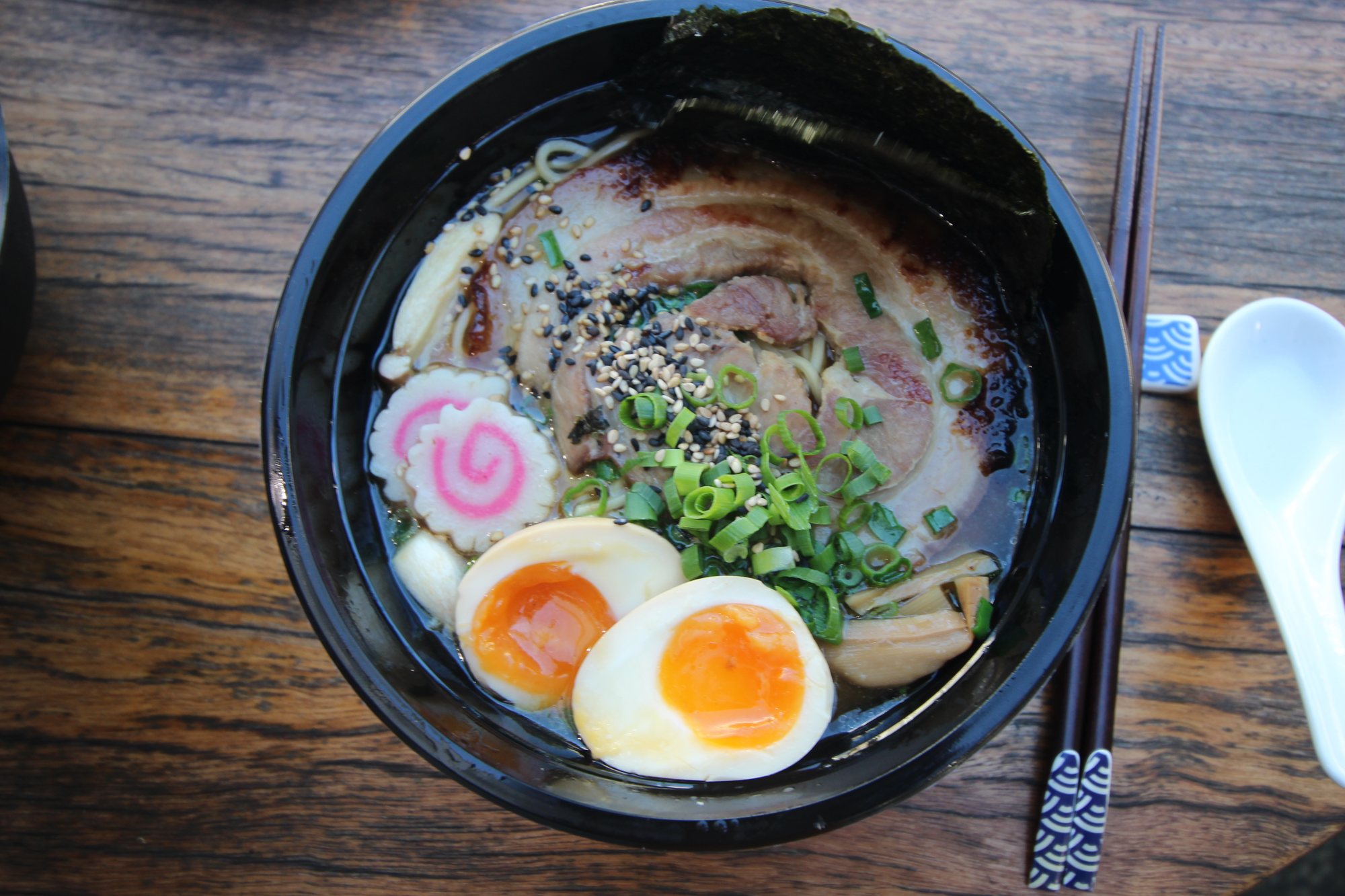
Fukuoka is the home of tonkotsu ramen — the cloudy, creamy pork-bone broth the whole world now copies. Here it’s thin, firm noodles served fast, and you’re expected to order kaedama (an extra serving of noodles, around ¥150) when you finish your first round.
Now for the local layer nobody tells you: noodle firmness. Ordering kata (firm) is the shared default here — I’d say about 80% of locals ask for it, and some shops offer five or more levels of firmness. One genuine local warning, though: at a shop you’re visiting for the first time, don’t volunteer your firmness preference unless the staff asks. At some old-school shops the master takes pride in serving noodles the way he believes they should be — and yes, a few get grumpy if you start customizing on your first visit. When in doubt, order it straight and see what the house standard tastes like.
Both Ichiran and Ippudo were born in Fukuoka, and you can visit their original shops. But locals mostly queue elsewhere: places like Shin-Shin near Tenjin or the no-frills shops around Hakata Station.
The three bowls to aim for
Hakata Issou (Hakata Station East) — the modern face of tonkotsu, nicknamed the “tonkotsu cappuccino” for its fine, foamy broth. It’s a short walk from the station, so it slots neatly into your arrival or departure day. Shortest queues are right at opening or around 3pm on a weekday; around ¥960 a bowl, ticket machine, cash only, and just 21 seats.
Ganso Nagahamaya — the origin point of the light, quick Nagahama style, feeding fish-market workers since 1952, and the culture of kaedama noodle refills grew up here. A bowl costs around ¥550 and the shop opens at 6am — ramen for breakfast here is as local as it gets. One warning: several similarly named shops operate nearby, so make sure you’re at the original 元祖長浜屋.
Shin-Shin (Tenjin main shop) — the approachable one: pork broth rounded out with chicken and vegetables, ultra-thin noodles, none of the heavy funk. When a local broadcaster polled 5,000 tonkotsu lovers, this took first place. It queues even after midnight; mid-afternoon is the quiet time to go.
Don’t try to do all three in one day — spread them out and skip the table condiments on your first bowl so you can actually compare the broths. Prices shift, so treat these as a guide. A dedicated deep-dive — 7 shops locals actually queue for — is coming soon.
Yatai: eating at Fukuoka’s open-air food stalls
The yatai are Fukuoka’s signature experience — small mobile stalls seating maybe eight people, opening around 6pm along the Nakasu riverside and around Tenjin. You squeeze in next to strangers, order ramen, yakitori or oden, and talk. No other Japanese city has kept this culture alive at this scale.
Two local rules: order at least one dish per person (it’s a restaurant, not a bench), and don’t occupy a seat for hours on one beer. Most stalls are cash-only.
And one mindset tip from a local: treat the yatai as an experience, not a gourmet destination. You’re paying for the night air, the river, the steam and the conversation as much as for the food itself. Come with that expectation and you’ll have one of the best evenings of your trip.
Four stalls to start with
Nakasu Juban (Nakasu riverside) is my suggested first stop: transparent pricing, proper receipts, cards and e-money accepted, and one stall covering ramen, yaki-ramen, mentaiko dishes, motsunabe and gyoza. In Tenjin, Kiryu is the beginner-friendly pick with a long menu and famously chewy gyoza, while Koganechan is the inventor of yaki-ramen — Fukuoka’s stir-fried ramen — where you should bring cash and arrive before 6:30pm. And out in Nagahama, Mentai Chudoku is a stall devoted entirely to mentaiko dishes, which is exactly as good an idea as it sounds; it even takes reservations via Instagram.
Two honest notes. These stalls are officially listed as having multilingual menus, but a full English menu isn’t guaranteed — pointing at what your neighbor is eating genuinely works, and it starts conversations. And yatai close suddenly for rain, wind or the owner’s day off, so check the city’s official yatai account on LINE (“FUKUOKA GUIDE”) before you head out.
Motsunabe: the local soul food tourists skip
Motsunabe is a bubbling hotpot of beef or pork offal, cabbage and garlic chives in a soy or miso broth. That description scares some visitors off, which is a mistake — properly done motsu is rich, clean and nothing like you imagine. It’s the dish Fukuoka people eat with friends on a cold night, finished with champon noodles dropped into the broth.
Udon: Fukuoka’s other noodle (and the older one)
Here’s a local secret: Fukuoka is historically an udon town — some say udon arrived in Japan through Hakata centuries ago. The local style is soft, not chewy like Sanuki udon, served in a light dashi with gobo-ten (burdock tempura) on top. In fact, plenty of locals eat udon more often than ramen, and the city is full of homegrown udon chains — which tells you how deep the habit runs.
Mentaiko: the taste of Hakata you can take home
Spicy marinated cod roe is Fukuoka’s most famous food product — on rice, in onigiri, in pasta, folded into an omelette. You’ll see it everywhere, from department-store food halls to dedicated mentaiko restaurants. It also makes the best edible souvenir from the city, and several brands now ship or sell overseas.
Eat with the seasons
Winter (roughly November to March) brings the kaki-goya — oyster huts on the coast where you grill your own oysters by the kilo. Summer is for cold noodles and beer gardens. Squid sashimi from nearby Yobuko is a year-round specialty worth seeking out.
Where to eat: a 30-second map of the city
Hakata Station area for ramen and everything a traveler needs under one roof; Nakasu for yatai and nightlife; Tenjin and Daimyo for the highest density of restaurants, izakaya and cafes; the coastal areas for seafood. Almost everything above is within one subway line — this is the easiest food city in Japan to navigate. If you’re deciding where to base yourself for maximum eating, see my guide on where to stay in Fukuoka.
Want a local to walk you through it?
If it’s your first night and you’d rather not decode yatai etiquette alone, a guided food tour solves it in one evening. I’ve listed the ones worth the money here: Fukuoka food experiences on byFood.
Keep planning
Hungry but also want to see things between meals? Read Things to Do in Fukuoka, plan your days with the 1–3 day Fukuoka itinerary, or venture further with the best day trips from Fukuoka.