
This post may contain affiliate links. See our disclosure.
Fukuoka is not a city of bucket-list monuments, and locals like me consider that its best feature. There’s no single sight you “must” see — instead there’s a compact, walkable city that’s ideal for actually living like a local for a few days: parks, shrines wedged between office buildings, food halls, a beach twenty minutes from downtown. Here’s my honest list of what’s worth your time, and what you can skip.
Ohori Park and the castle ruins
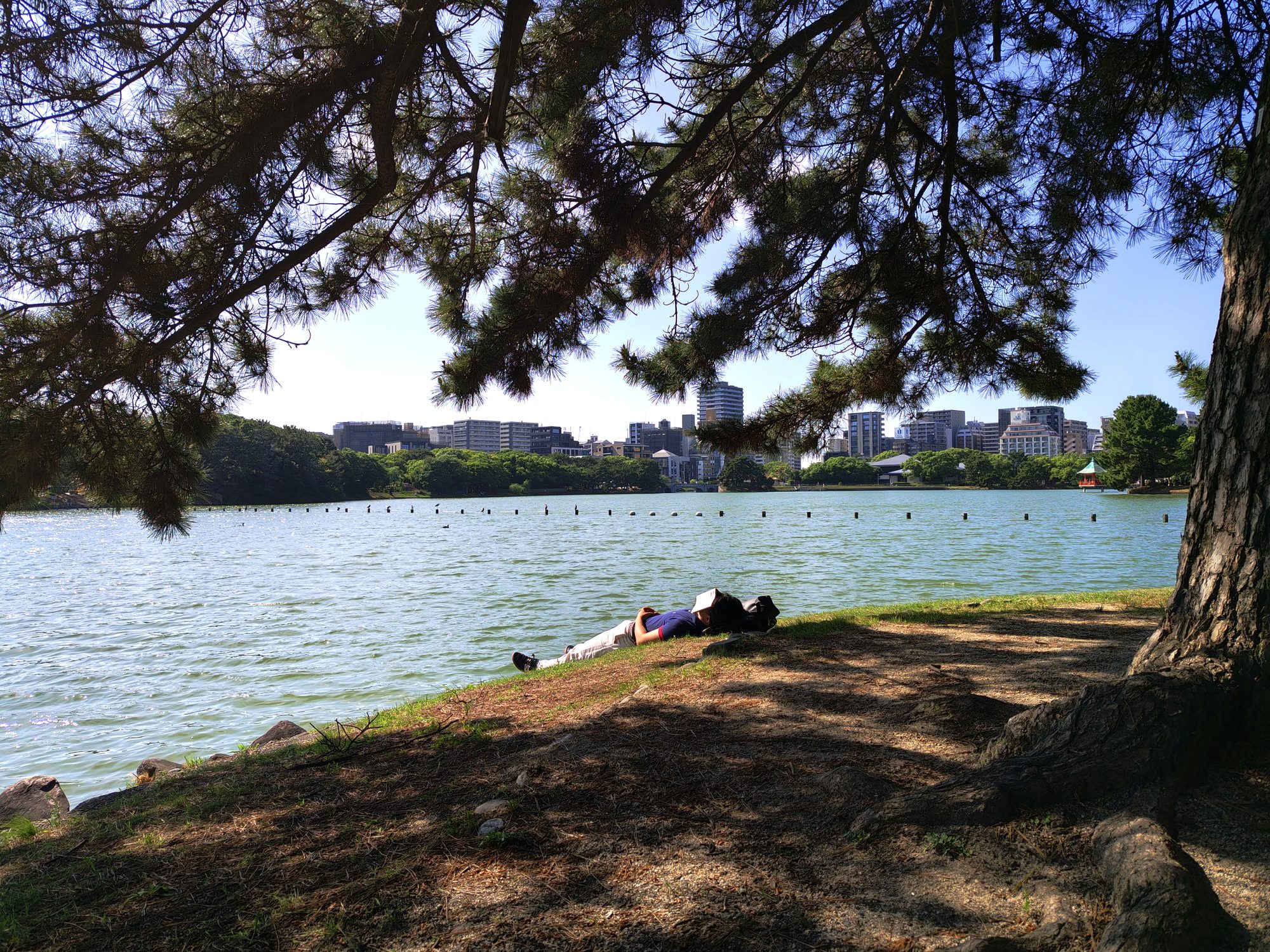
Ohori Park is Fukuoka’s living room — a huge pond with a 2km walking loop, a Japanese garden on its edge, and the stone ramparts of Fukuoka Castle next door. Go in the morning when locals are running and the light is on the water. In cherry blossom season (late March to early April), the castle ruins at Maizuru Park become one of Kyushu’s best hanami spots.
Kushida Shrine and old Hakata
Kushida-jinja is the city’s guardian shrine and the spiritual home of the Hakata Gion Yamakasa festival. One of the giant decorated floats is displayed here year-round, so you get a taste of the festival even outside July. The surrounding streets of old Hakata hide temples, machiya houses and craft shops most visitors walk right past.
Nanzoin Temple and the Reclining Buddha
About 20–30 minutes by local train from Hakata, Nanzoin Temple is home to a bronze reclining Buddha claimed to be among the largest in the world — and it’s still a working temple, not a tourist trap. Go early, dress respectfully, and combine it with a walk around Sasaguri’s forested temple trail. This one genuinely surprises people.
The seaside: Momochi and Fukuoka Tower
Seaside Momochi is the city’s planned waterfront — a beach, Fukuoka Tower, and sunsets over Hakata Bay. Is the tower observation deck essential? Honestly, no. But an evening walk on the beach with the city behind you is a good reset between meals.
Across the bay: Marine World, Uminonakamichi and Shikanoshima Island
Fukuoka hides a full half-day of sea air right across Hakata Bay. Take the ferry from the city (or the JR line around the bay) to Uminonakamichi: Marine World, the region’s big aquarium, does its dolphin shows with the real bay as the backdrop, and the vast Uminonakamichi Seaside Park next door is all flower fields and rental bikes. Keep going and you reach Shikanoshima, a laid-back island connected by a sand causeway — beaches, seafood shacks, and the spot where one of Japan’s most famous national treasures, an ancient gold seal, was dug up. It feels far more remote than it is, which is exactly the point.
Getting there is half the fun: the city-run ferry from Hakata Pier (Bayside Place) reaches Saitozaki in about 15 minutes and Shikanoshima in about 30 — ¥450 and ¥680 one way, with IC cards and credit cards accepted at the ticket counters, and bikes travel for an extra ¥100. Boats run through the day, but the last returns are earlier on Sundays and holidays, and services stop in rough weather — recheck the timetable on the day you go.
If it’s raining
Fukuoka handles rain well: Canal City’s shops and its basement “Ramen Stadium”, the food halls under Hakata Station, the Asian Art Museum, and Tenjin’s underground shopping street will fill a wet day without a taxi. A dedicated rainy-day guide is coming soon.
Festivals worth planning around
Two events transform the city. Hakata Gion Yamakasa (early July) climaxes at dawn on July 15 with teams of men racing one-ton floats through the streets — if you’re in Japan then, rearrange your trip for it. November brings one of Japan’s six annual grand sumo tournaments to Fukuoka, and tickets are far easier to get than in Tokyo.
Day trips: where the region opens up
Some of “Fukuoka’s” best sights aren’t in Fukuoka at all: the great Tenmangu shrine at Dazaifu, the canal town of Yanagawa, the beaches and cafes of Itoshima. I’ve ranked all of them in the day trips guide.
Booking experiences
Most of the above needs no ticket at all — that’s Fukuoka. For the things that do (tours, classes, sumo-season activities), I keep a shortlist of vetted options here: Fukuoka activities on Klook.
Keep planning
Pair this list with the Fukuoka food guide (the real reason you’re here), fit it all together with the 1–3 day itinerary, and choose your base with where to stay in Fukuoka.