
This article may contain affiliate links. Please see our disclosure page for details.
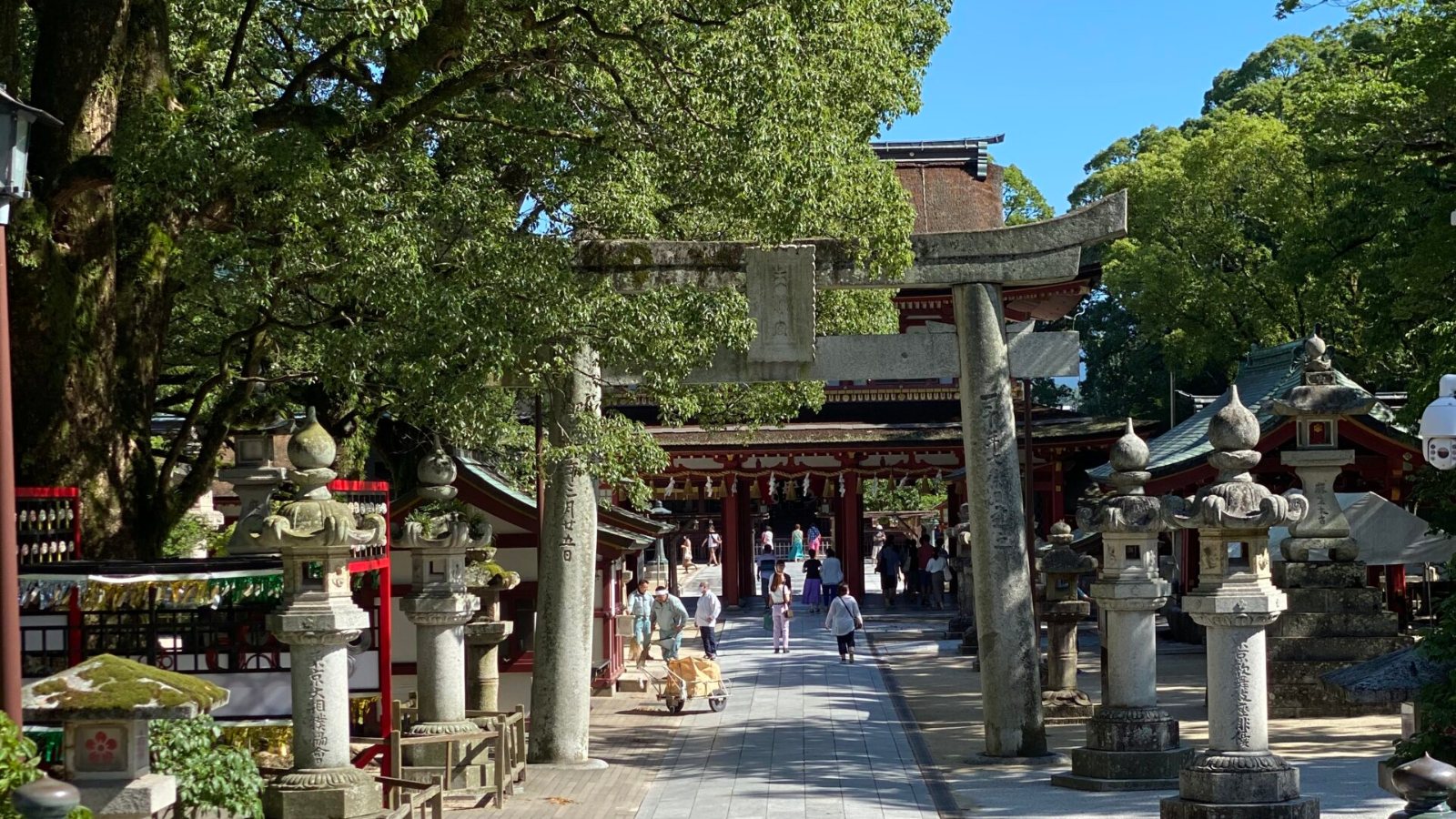
If you have time for one easy half-day trip from Fukuoka, make it Dazaifu. Dazaifu Tenmangu combines one of Kyushu’s most important shrines, a memorable approach street, and enough nearby sights to fill a relaxed morning or afternoon without complicated logistics.
It is also a particularly good time to visit. The shrine’s Important Cultural Property main sanctuary has just completed its first major renovation in 124 years. The enshrined spirit of Sugawara no Michizane was returned from the temporary hall to the restored sanctuary at a ceremony on May 16, 2026, so worship is now centered on the main sanctuary again.
Why Dazaifu Tenmangu matters
Dazaifu Tenmangu is dedicated to Sugawara no Michizane (845–903), a scholar and statesman who is revered as Tenjin, the deity of learning, culture, and the arts. A small shrine was built over his grave in 905. The present main sanctuary was reconstructed in 1591.
You will see students and families praying for success in examinations, along with ema prayer plaques covering the grounds. The shrine’s best-known symbol is the Tobiume, or “flying plum tree,” to the right of the main sanctuary. According to legend, the plum tree flew from Kyoto because it missed Michizane.
The restored main sanctuary: what changed in 2026
The temporary hall, designed by architect Sou Fujimoto with trees planted on its roof, served as the place of worship during the renovation. Its public role ended on May 16, 2026, and the shrine began dismantling and removing it from May 17. The shrine plans to transplant the roof trees elsewhere within the grounds.
For a first visit, focus on the restored main sanctuary rather than treating the temporary hall as the main attraction. If you visited during the renovation, the completed restoration gives you a clear reason to return.
How to get to Dazaifu from Fukuoka
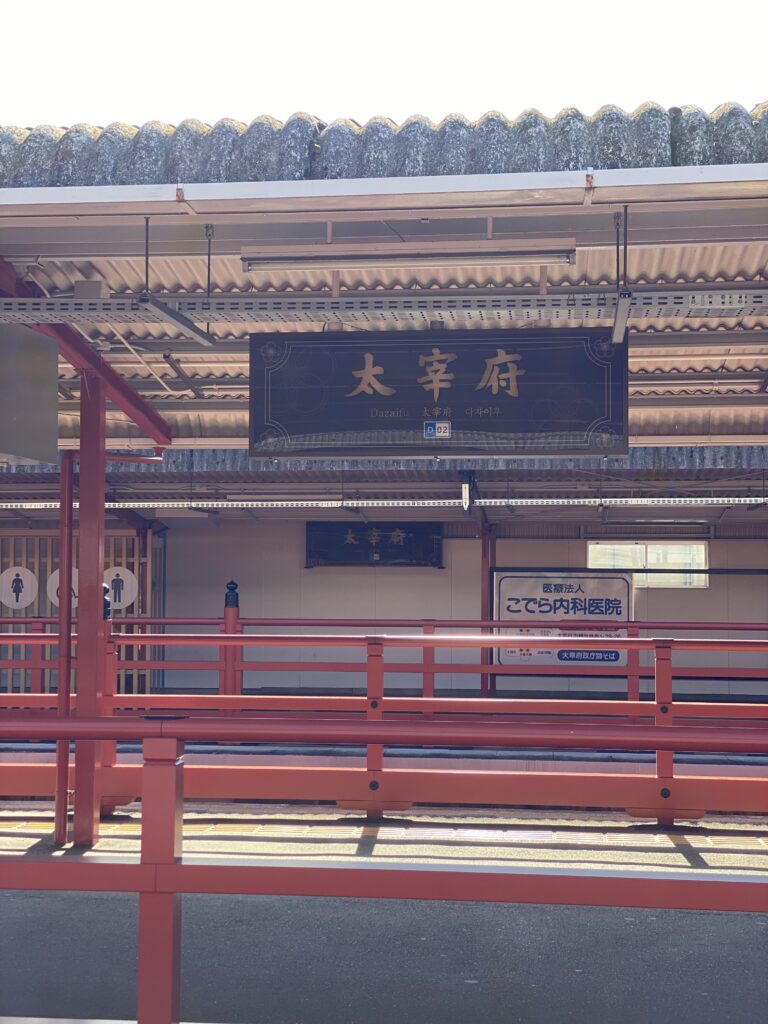
By train: the practical choice from Tenjin
From Nishitetsu Fukuoka (Tenjin) Station, take a Limited Express to Nishitetsu Futsukaichi. That first leg takes about 13 minutes. Change there to a Dazaifu Line train for Dazaifu Station. Connections vary by time and day, so check Nishitetsu’s date-specific timetable rather than planning around a fixed total journey time.
The adult one-way fare from Nishitetsu Fukuoka (Tenjin) to Dazaifu is ¥480 as checked on September 16, 2026. The themed Dazaifu sightseeing train, Tabito, has a separate and changeable operating schedule. Check the official timetable before building it into your day.
By direct bus: useful from Hakata or Fukuoka Airport International Terminal
The Dazaifu Liner Bus Tabito leaves from stand 11 on the first floor of Hakata Bus Terminal. It takes about 40 minutes to Dazaifu in normal traffic, but road congestion can add time. The adult cash fare is ¥800 from Hakata Bus Terminal, or ¥780 with eligible IC-card or credit-card payment.
Dazaifu-bound buses also serve Fukuoka Airport International Terminal. From there, the standard journey is about 25 minutes and the adult cash fare is ¥700. If you arrive at Fukuoka Airport’s domestic terminal, allow extra time to take the airport shuttle to the international terminal; the shuttle ride itself is about 11 minutes, excluding waiting time.
From Dazaifu Station, follow the Omotesando approach straight toward the shrine. There is no need to book a tour for the shrine alone.
What to eat on the approach: umegae mochi
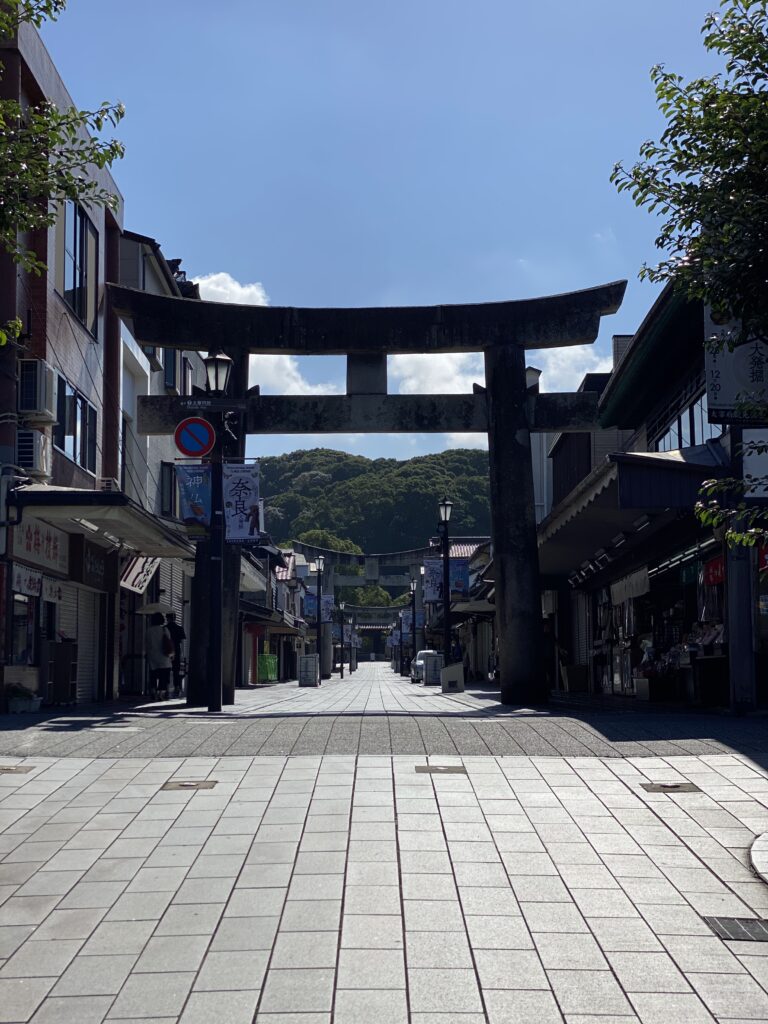
The essential Dazaifu snack is umegae mochi: a small grilled cake made from glutinous and non-glutinous rice dough, filled with azuki bean paste and stamped with a plum-blossom mark. Buy one fresh and eat it while it is still warm.
Do not expect one fixed price across every shop. Officially listed package prices at established shops work out to roughly ¥130–¥180 per piece, but shop, package format, seasonal varieties, and counter prices differ. Check the displayed price at the shop you choose rather than relying on a universal number.
There is no need to make this a ranking exercise. If one queue is much longer than the others, choose a shop that is serving freshly grilled cakes and keep moving. A warm cake eaten immediately is the point; a boxed one is better treated as a souvenir for later.
A worthwhile coffee stop: Starbucks Dazaifu Tenmangu Omotesando
Starbucks Coffee Dazaifu Tenmangu Omotesando is worth a stop if you want coffee or a design-focused break. Architect Kengo Kuma designed the branch around the idea of combining tradition and contemporary design with natural materials. Its X-shaped interior framework uses approximately 2,000 cedar members.
The official store listing gives standard hours of 8:00 a.m. to 8:00 p.m. with irregular days off. Check the listing on the day, because temporary changes are possible.
What to see inside the shrine grounds
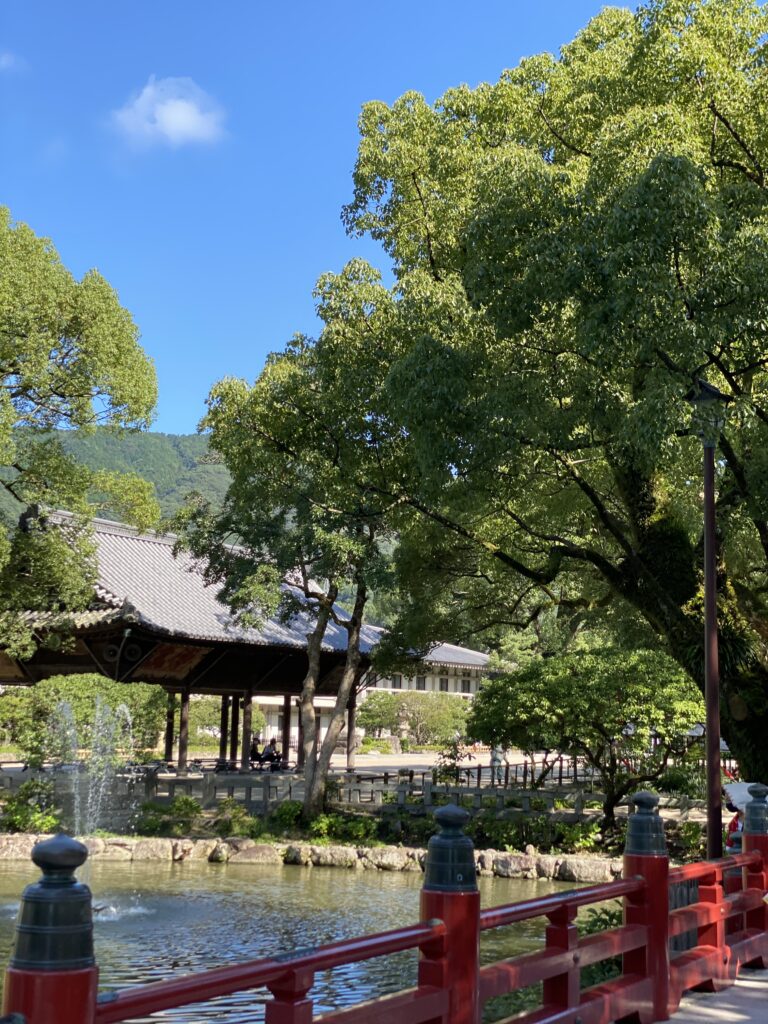
After the approach, cross the three vermilion bridges over Shinji Pond. They represent the past, present, and future. The two outer bridges are arched taiko-bashi, while the middle bridge is flat.
Look for the sacred ox statues, known as goshin-ushi. There are 11 on the grounds. Visitors often touch their heads while praying for wisdom. Then visit the restored main sanctuary and the Tobiume on its right.
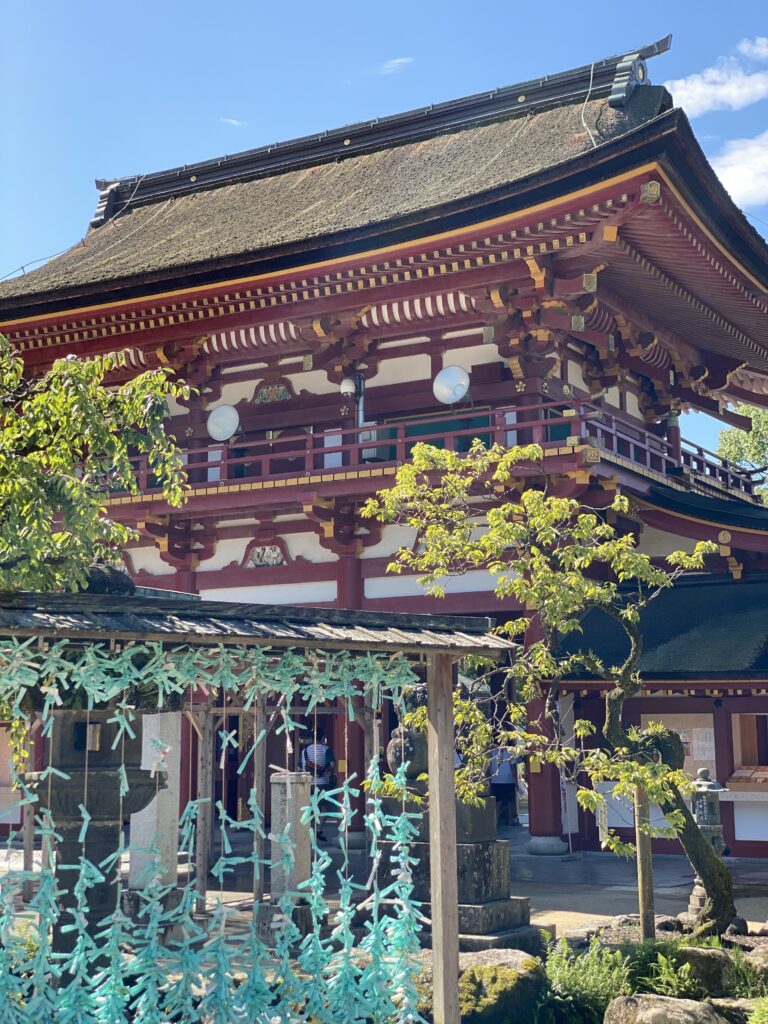
If you have another 20 to 30 minutes, continue behind the main sanctuary to Tenkai Inari Shrine. It is about a 10-minute walk each way and has an approach lined with red torii gates, 12 zodiac bells, and an inner sanctuary in a cave-like setting. It is a better addition for travellers who want a short wooded walk than for anyone trying to rush through the approach street and leave immediately.
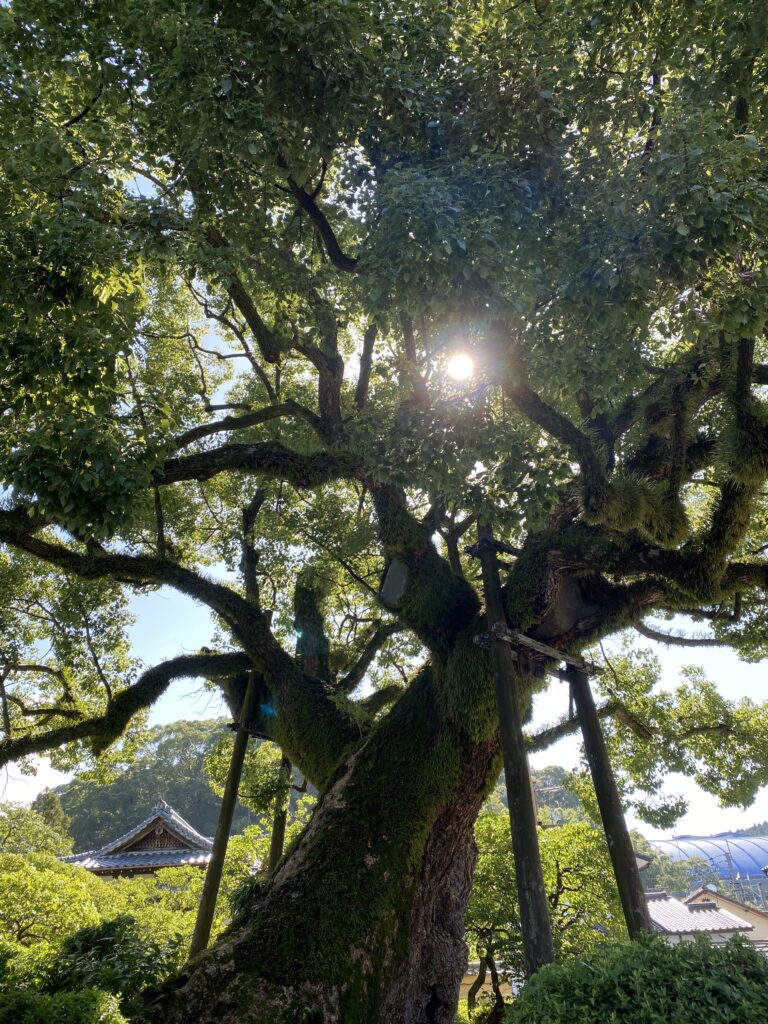
The shrine grounds and worship at the main sanctuary are free. Regular opening hours change seasonally: the grounds normally open at 6:00 a.m. from the spring equinox and 6:30 a.m. from the autumn equinox, with a usual closing time of 7:00 p.m. Festival schedules can change these hours, so check before an early or late visit.
Add Kyushu National Museum if you have time
Kyushu National Museum is the best nearby addition on a rainy day, in summer heat, or when you have more than a quick half-day. From the shrine, follow the signposted route toward the entrance tunnel and take the escalators up the hill.
The fourth-floor permanent exhibition, the Cultural Exchange Exhibition Hall, explores Japan’s history through exchanges with Asia and Europe. Regular admission is ¥700 for adults and ¥350 for university students. Regular hours are 9:30 a.m. to 5:00 p.m., with last admission at 4:30 p.m. The museum normally closes on Mondays; when Monday is a public or substitute holiday, it closes on the following weekday instead.
Special exhibitions have separate prices and may change the hours. Check the museum calendar before visiting. Allow at least an hour if you want to see the permanent exhibition properly rather than simply walking through the building.
Optional extension: Kamado Shrine
Kamado Shrine is a good extension only if you have extra time and want a quieter stop at the foot of Mount Homan. From Nishitetsu Dazaifu Station, it is about a 40-minute walk or about 10 minutes on Dazaifu City’s Mahoroba community bus to the Uchiyama stop. The bus fare is ¥100 for elementary-school-age passengers and older.
The shrine is dedicated to Tamayori-hime-no-Mikoto and is known for prayers related to relationships, warding off misfortune, and direction. Its name is often discussed by Demon Slayer fans, but the shrine’s official information does not confirm that it is an anime model or pilgrimage site. Treat it as a shrine visit, not as a guaranteed pop-culture stop.
When to go: plum season, New Year, and quieter timing
Dazaifu Tenmangu has about 6,000 white and red plum trees across roughly 200 varieties. The usual viewing season runs from February to early March, although exact flowering varies by year because early-, mid-, and late-blooming trees open in sequence.
For a less pressured visit, arrive early on a weekday when you can. New Year is a major traffic-management period, and the shrine advises visitors to consider rail travel because roads can be heavily congested. During the New Year period, the grounds remain open continuously from 6:30 a.m. on December 31 until 9:00 p.m. on January 4, but prayer, amulet, and calligraphy reception hours are separate. Check them before travelling.
A simple half-day plan
Start at Dazaifu Station in the morning. Walk the Omotesando approach, buy one freshly grilled umegae mochi, and allow time for the bridges, sacred ox statues, main sanctuary, and Tobiume. Add Tenkai Inari Shrine if you want a short walk. Then either return to Fukuoka for lunch or continue to Kyushu National Museum for an additional hour or more.
That is the balance that makes Dazaifu work: it is easy enough to visit without a tour, but substantial enough that you should not reduce it to a quick photo stop.