
This post may contain affiliate links. See our disclosure.
Fukuoka’s location is its superpower: it’s the gateway to all of Kyushu, and half the island is within day-trip range of Hakata Station. I’ve done every trip on this list more times than I can count. Here they are, ranked by how much I’d recommend them to a first-time visitor — with honest notes on when each one is and isn’t worth it.
1. Dazaifu — the essential half-day
About 30–40 minutes by Nishitetsu train from Tenjin. Dazaifu Tenmangu is one of Japan’s most important shrines, dedicated to the deity of learning, and its approach street is lined with shops grilling umegae-mochi rice cakes. The Kyushu National Museum sits behind it. Go in the morning before the tour buses; you can be back in Fukuoka for a late lunch.
2. Yanagawa — canals, boats and eel
About 50 minutes by Nishitetsu train. Yanagawa is a castle town threaded with canals, toured on flat-bottomed boats poled by singing boatmen. It’s unashamedly nostalgic and it works. The local specialty is unagi no seiro-mushi — steamed eel over rice — and it’s reason enough for the trip. Nishitetsu sells a combined train + boat ticket, and Dazaifu + Yanagawa can be combined in one full day.
3. Itoshima — the coastal escape
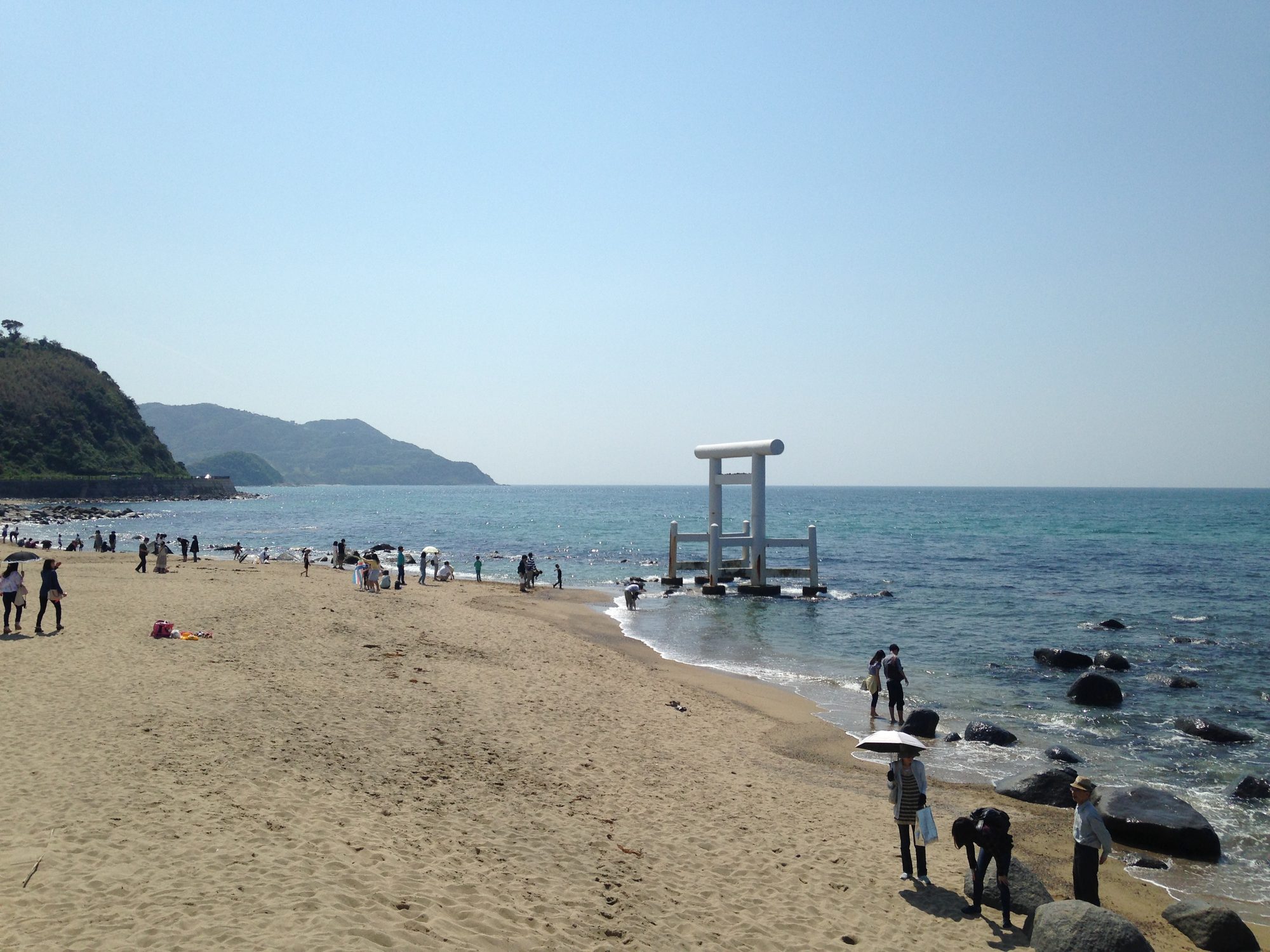
40–60 minutes by train/bus or car. White-sand beaches, surf shops, roadside oyster huts in winter and photogenic coastal cafes: Itoshima is where Fukuoka goes on its day off. It’s best with a rental car; by public transport, focus on one area rather than trying to loop the peninsula. Skip it in bad weather — this one is entirely about the coast.
How to do it right: with a car, run the peninsula west to east — a morning swim at Keya Beach (calm, sheltered water in season), a stop at the Mataichi salt workshop “Tottan” for its famous salt pudding, a long lunch at a sea-view cafe such as Itoshima Sabo, then arrive at Sakurai Futamigaura — the white torii gate and the Married Couple Rocks — an hour before sunset. Without a car, keep it simple: the family-friendly beach at Fukae is a 12-minute walk from a JR station, or focus on Futamigaura by bus — but confirm the last bus back before you chase that sunset, because services are sparse. And one correction to the postcards: Futamigaura is for watching the sea, not swimming in it.
4. Kokura and Tanga Market — Kitakyushu’s kitchen
About 15–20 minutes by shinkansen from Hakata — the shortest bullet-train hop you may ever take — or around an hour by regular train. Kokura’s Tanga Market has fed Kitakyushu for a century, and it’s the place to eat seafood straight from the stalls: build-your-own fresh seafood bowls, and nukamisodaki — fish simmered in fermented rice-bran paste, a Kokura specialty you won’t find elsewhere. The market survived major fires a few years back and is rebuilding with real energy, with new market halls opening in stages — the working-market atmosphere is very much alive. Kokura Castle is a short walk away, and rail fans should note Kokura is also the jumping-off point for the retro port district of Mojiko.
Do it the local way: arrive around 10:30 on a weekday or Saturday (many fish shops rest on Sundays), walk the arcade end to end once to scout, then choose. A seafood-bowl lunch runs roughly ¥1,100 for the standard sets up to about ¥2,000 for the premium tuna bowls at Aramaki and Kyushu Maguro, and the market’s own specialties — nukamisodaki above all — make the best follow-up bites. Give it 90 minutes if you can.
5. Yufuin and Beppu — the onsen day (or better, night)
Roughly 2 hours by express train or highway bus. Yufuin is the boutique onsen town — craft shops and cafes under Mount Yufu; Beppu is the steaming, retro onsen city with its “hells” to tour. Both are doable as a long day trip, but this is the one I’d upgrade to an overnight ryokan stay if your schedule allows even one spare night. Check ryokan availability early; the good ones fill first.
6. Nagasaki — the full-day history trip
About 1.5 hours by the Kamome shinkansen + relay express. The Peace Park and Atomic Bomb Museum, the old European trading quarter, Chinatown and champon noodles, and one of Japan’s best night views from Mount Inasa. It deserves an overnight, but a disciplined day trip works: museum and Peace Park in the morning, Glover Garden and Chinatown in the afternoon.
7. Kumamoto — castle, horse sashimi and ramen
Under an hour by shinkansen. Kumamoto Castle — still visibly recovering from the 2016 earthquakes but mighty — plus Suizenji Garden, a distinct garlic-heavy ramen style, and basashi: horse sashimi, the local delicacy that rewards the brave. A solid trip, ranked last only because the ones above are more distinctly “un-Fukuoka” experiences.
Do you need a rail pass?
Maybe — it depends entirely on which trips you stack. The Nishitetsu trips (Dazaifu, Yanagawa) aren’t covered by JR passes at all, while Nagasaki and Kumamoto are where a JR Kyushu pass starts paying for itself. I run the honest math in the upcoming rail pass guide; until then, you can check pass options here: JR Kyushu passes on Klook.
Keep planning
Slot one of these into the 1–3 day Fukuoka itinerary, refuel afterwards with the food guide, and if Yufuin tempted you into an overnight, sort your city base first with where to stay in Fukuoka.